
Eustachian Tube Dysfunction
Why You Experience Ear Pressure when Flying
May 11, 2026
•
8 minutes
Reviewed by Michael Kaplan, MD
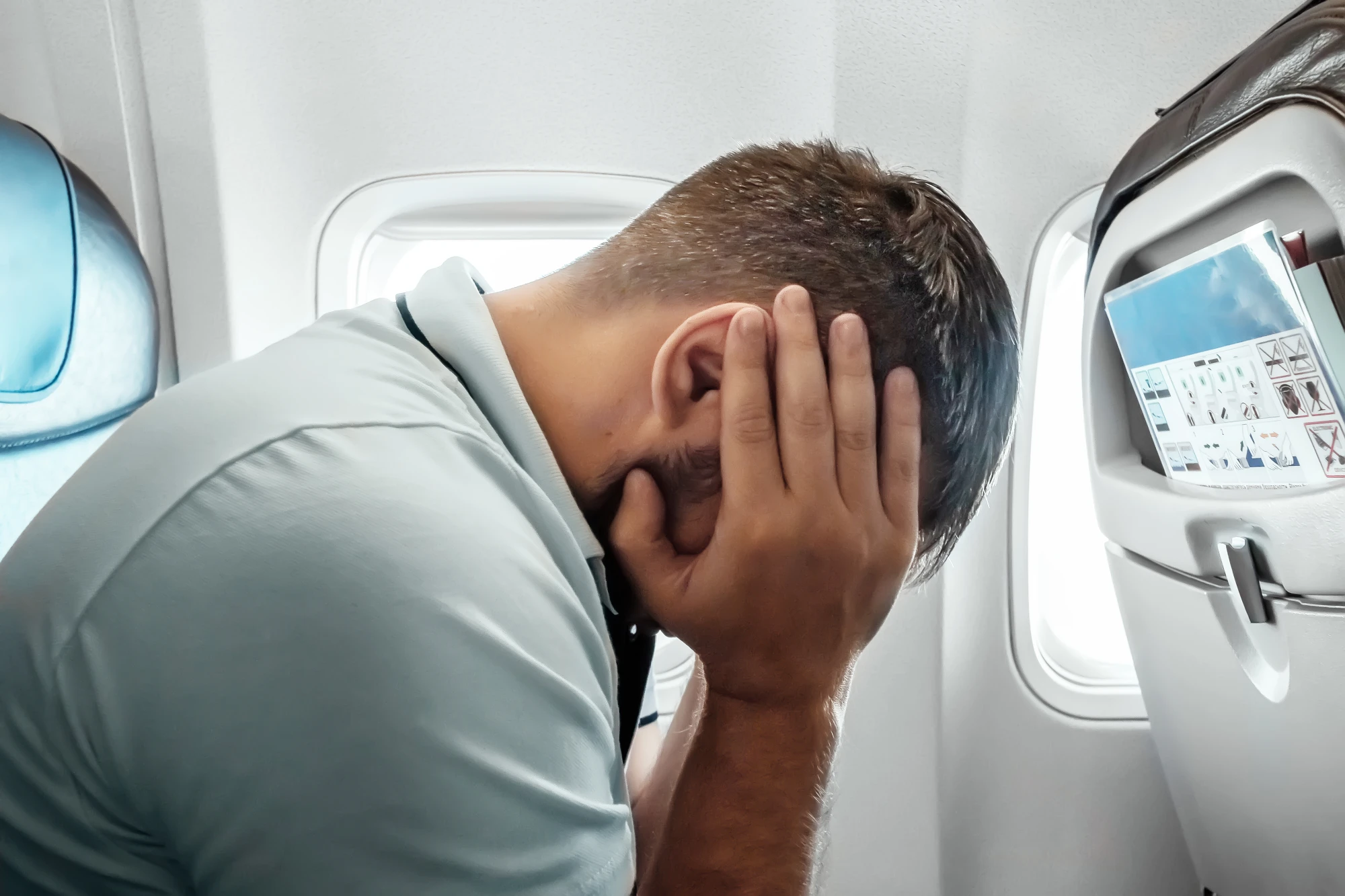
That moment when the plane climbs and your ears suddenly feel like they’re stuffed with cotton, is one of the most uncomfortable parts of air travel. For most people, it passes quickly. But for others, the pain lingers long after landing, and it happens every single time they fly. If that sounds familiar, you’re not alone, and more importantly, there’s a reason it keeps happening.
Here are the most common reasons people experience increased ear pressure when flying:
- Eustachian tube dysfunction
- Sinus congestion or nasal inflammation
- Allergies that cause chronic inflammation
- A recent cold or sinus infection
- Structural issues in the ear or nasal passages
If flying has started to feel like something you dread rather than enjoy, it may be time to find out what’s actually going on. Dr. Michael Kaplan and the team at Kaplan Sinus Relief are among the most trusted Houston ENT specialists, with a long record of helping patients find lasting relief — just read through our testimonials from patients who thought they’d have to live with ear pain forever.
Don’t wait until your next trip to take action. Schedule an appointment today and find out why your ears are struggling — and what can be done about it.
“Dr. Kaplan is the most caring and knowledgeable ENT doctor I have ever met. His staff is also excellent. I cannot say enough good things about the whole team. I won’t go anywhere else. I have recommended them to all my friends.”
— Mary B, Google Review
Eustachian tube dysfunction
Your Eustachian tubes are small channels that connect your middle ear to the back of your throat, and their job is to keep the pressure on both sides of your eardrum balanced. When they’re working properly, you might not even notice them — a quick yawn or swallow is all it takes to pop your ears and move on.
But when Eustachian tube dysfunction is present, those tubes don’t open and close the way they should, leaving your ears unable to keep up with the rapid pressure changes inside a plane’s cabin. This is one of the most common causes of airplane ear, and it’s also one of the most treatable when properly diagnosed.
Sinus congestion or nasal inflammation
Your sinuses and ears are more connected than most people realize. When your nasal passages are swollen or congested — whether from a temporary irritant or an ongoing issue — that inflammation can spread to the tissues surrounding your Eustachian tubes and make it much harder for your ears to equalize.
Flying in this state often turns a minor annoyance into real pain, and for some passengers, the pressure buildup becomes severe enough that their ear is swelling or feeling like it might burst. Finding airplane ear pressure relief starts with understanding and addressing what’s driving that congestion in the first place.
Allergies that cause chronic inflammation
Seasonal or year-round allergies are among the most overlooked causes of ear discomfort during flights. When allergens trigger an immune response, the resulting inflammation doesn’t stay in your nose — it affects the entire upper respiratory system, including the pathways that regulate ear pressure.
Over time, chronic inflammation makes your Eustachian tubes increasingly sensitive, so what might be a minor pressure shift for someone else can feel genuinely painful for an allergy sufferer. This is one of the more frustrating common ENT problems because the ears take the brunt of something that started as a stuffy nose.
A recent cold or sinus infection
Boarding a flight while you’re sick — or even just recovering — is one of the fastest ways to turn ear pressure into a serious problem. A cold or active ear infection and sinus infection at the same time means the tissues around your Eustachian tubes are already irritated and swollen before the plane even leaves the ground.
As cabin pressure shifts during takeoff and landing, your ears simply don’t have the room they need to adjust, which can lead to sharp pain, muffled hearing, or pressure that doesn’t resolve for hours or even days after you land.
Structural issues in the ear or nasal passages
Sometimes the issue isn’t something you caught — it’s something you were born with or developed gradually over time. A deviated septum, narrow Eustachian tubes, nasal polyps, or other structural differences can all interfere with your ears’ ability to handle pressure changes.
These kinds of underlying conditions often go undiagnosed for years because the symptoms only become obvious in high-pressure situations, like flying. If you’ve tried every over-the-counter trick and still can’t get comfortable on a plane, a structural issue may be the reason — and it’s exactly the kind of thing an ENT is trained to identify and treat.
How do you relieve ear pressure when flying?
There are several things you can do before and during your flight to make the experience a lot more comfortable, including:
- Swallow, yawn, or chew gum frequently during takeoff and landing to encourage your Eustachian tubes to open.
- Use a nasal decongestant spray about 30 minutes before boarding if you’re congested.
- Try the Valsalva maneuver — pinch your nose, close your mouth, and gently blow — to manually equalize pressure.
- Wear filtered earplugs designed specifically for flying, which slow the rate of pressure change reaching your eardrum.
- Stay hydrated throughout your flight, as dry cabin air can thicken mucus and make congestion worse.
- Avoid sleeping during takeoff and landing so you can actively work to equalize your ears.
These tips work well for occasional discomfort, but they’re not a substitute for proper airplane ear treatment if your symptoms are frequent, severe, or getting worse over time.
When to see an ENT for airplane ear
It’s time to see an ENT if you’re experiencing any of the following:
- Ear pain or pressure that doesn’t resolve within a day or two after landing
- Muffled or reduced hearing that lingers well beyond your flight
- A feeling of fullness in the ear that won’t go away on its own
- Ringing or buzzing in the ear after flying
- Dizziness or balance issues that started around the time of a flight
- Ear pain so severe during the flight that it interferes with your ability to function
- Recurring discomfort on every flight, even when you’re not sick or congested
- Any fluid, discharge, or bleeding from the ear following air travel
The earlier you address these symptoms, the more options you have. An ENT can go beyond the basics — whether that means ear cleaning to rule out blockages affecting your hearing, hearing testing and hearing aids to assess any impact the pressure has had on your hearing health, or a full ear infection treatment plan if an underlying infection has been quietly making things worse.
Ear pressure when flying — FAQs
Is airplane ear dangerous?
For most people, airplane ear is a temporary inconvenience that resolves on its own within a few hours. However, in more severe cases, it can lead to lasting complications like ruptured eardrums, significant hearing loss, or chronic ear pain if left unaddressed.
If you’re experiencing intense pain, ringing, or muffled hearing that doesn’t clear up after landing, it’s worth getting checked out by an ENT sooner rather than later.
Can airplane pressure cause ear damage?
Yes — while rare, the pressure changes during a flight can cause real physical damage to the structures of the ear, particularly the eardrum. Repeated exposure without proper management can wear down the ear’s ability to handle pressure over time, increasing the risk of injury with each flight.
If you notice any bleeding, sudden hearing loss, or persistent pain after flying, those are signs that something may have been injured and needs professional attention.
How long does ear pressure from flying last?
For most travelers, the pressure and discomfort clear up within a few minutes to a few hours after landing. If your ears are still bothering you a day or two after your flight, that’s outside the normal range and worth paying attention to. Lingering symptoms are often a sign that an underlying condition is preventing your ears from fully recovering on their own.
If every flight leaves your ears ringing, it’s time to talk to Kaplan Sinus Relief.
Dealing with ear pressure when flying is frustrating enough on its own — but when it happens every single trip, it’s your body’s way of telling you that something needs attention. There’s almost always an underlying reason your ears struggle at altitude, and an experienced ENT can find it.
Dr. Michael Kaplan and the team at Kaplan Sinus Relief have helped countless patients get to the bottom of their ear issues and actually enjoy traveling again. Whether your symptoms are mild and recurring or severe enough to make you avoid flights altogether, you deserve a real answer — not just another round of trial and error.
Schedule an appointment today and find out what’s been standing between you and a comfortable flight. Relief might be a lot closer than you think.
More Helpful Articles by Kaplan Sinus Relief: