
ENT Conditions
Why Is My Eye Throbbing (Hint: It Could Be Your Sinuses)?
March 4, 2026
•
9 minutes
Reviewed by Michael Kaplan, MD

That throbbing behind your eye isn’t just annoying — it’s your body waving a red flag. Most people reach for pain relievers and hope it goes away, but if the pressure keeps coming back, the real culprit might not be your eye at all. Sinus problems are one of the most overlooked causes of eye pain, and if you’ve been Googling why is my eye throbbing at 2 a.m., you’re in the right place.
There are a few reasons your sinuses could be making your eyes miserable:
- Sinus inflammation
- A buildup of mucus in your ethmoid or sphenoid sinuses
- Chronic sinusitis causing persistent swelling
- Sinus headaches
If any of this sounds familiar, it may be time to stop guessing and start getting answers. Dr. Michael Kaplan and his team of Houston ENT specialists have helped countless patients finally understand what’s driving their pain — and their testimonials speak for themselves.
Don’t keep white-knuckling through the discomfort. Schedule an appointment today and find out if your sinuses are the source of your suffering.
How to tell if eye pain is from sinuses?
Eye pain can have a lot of causes, but sinus-related eye pain has some pretty telltale signs that set it apart. If your eye discomfort tends to show up alongside congestion, facial pressure, or other cold-like symptoms, your sinuses are likely the driving force.
Here’s what to look out for:
- Pressure or aching behind or around one or both eyes
- Pain that gets worse when you bend forward or lie down
- Swelling or puffiness around the eyes
- Watery, red, or crusty eyes alongside congestion
- Facial tenderness around the cheeks, forehead, or nose bridge
- Eye pain that worsens when your congestion flares up
- Headaches that radiate into the eye area
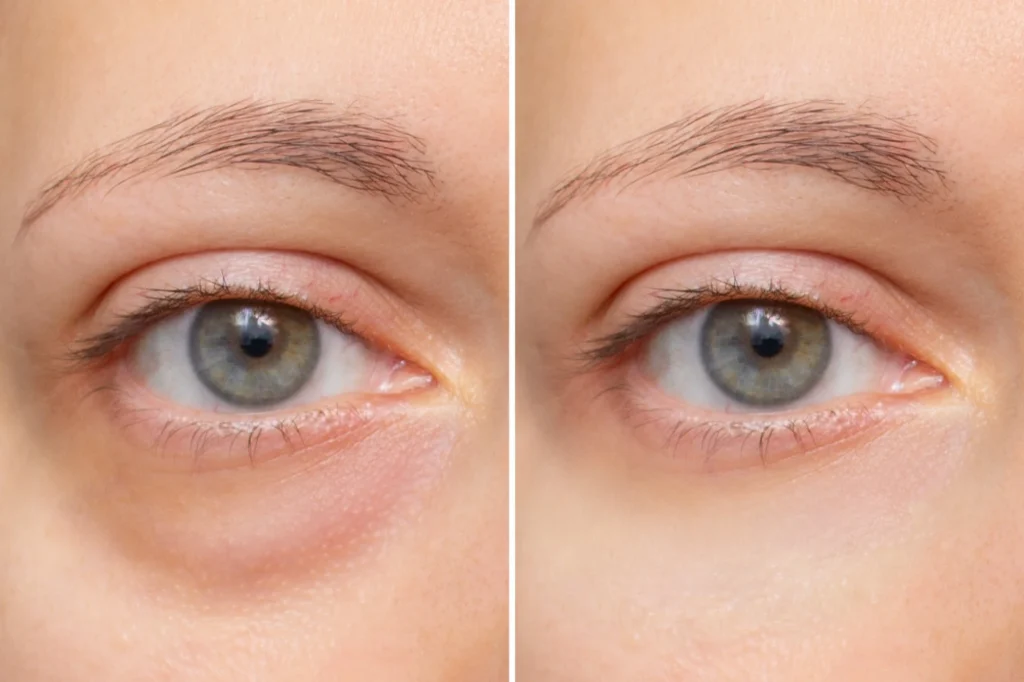
The picture of a swollen eye from sinus infection above shows what sinus-related eye swelling can actually look like — and for many patients, seeing it makes everything click.
If your eyes look or feel anything like this during a sinus flare-up, that’s your body telling you something more than allergies or a common cold is going on. The sooner you identify the root cause, the sooner you can get real, lasting relief.
How does a sinus infection affect your eyes?
Your sinuses and your eyes are closer neighbors than most people realize. When your sinuses become infected or inflamed, that irritation doesn’t always stay put — it spreads, and your eyes are often the first to feel it.
Below, we’ll walk through the most common ways a sinus infection can directly impact your eyes:
Sinus inflammation can cause eye pressure and pain
When your sinuses swell up, they push against the surrounding tissue — and that includes the delicate structures around your eyes. This is especially true with ethmoid sinusitis, an infection of the sinuses located right between your eyes, which can create intense pressure that feels like something is squeezing your eye from the inside.
You might also notice sinus eye pain on one side if the infection is more concentrated in one sinus cavity, which can make it feel like a completely different problem than what it actually is. The good news is that treating the underlying sinus infection typically brings that eye pressure down with it.
Mucus buildup can create pain behind the eyes
When mucus has nowhere to drain, it accumulates — and the pressure it creates can be surprisingly intense. That deep, throbbing ache you feel behind your eyes isn’t coming from your eyes themselves; it’s coming from the blocked sinus cavities sitting just behind them, particularly the ethmoid and sphenoid sinuses that nest right behind and between your eyes.
In some cases, sinus infection eye discharge can also occur when that backed-up mucus finds its way into the tear ducts, leaving your eyes red, watery, or crusty. If you’ve been waking up with goopy eyes alongside your sinus symptoms, there’s a good chance the two are connected.
Chronic sinusitis can lead to ongoing eye swelling and discomfort
When a sinus infection lingers or keeps coming back, the inflammation becomes a constant presence rather than a temporary inconvenience. Over time, that persistent swelling can cause recurring puffiness and discomfort around the eyes that never quite goes away.
The fatigue that comes with chronic sinusitis makes everything worse — many patients describe feeling so drained they’re practically falling asleep at work or struggling to get through basic tasks. If your eye discomfort has been going on for weeks or months rather than days, chronic sinusitis may be what’s keeping you stuck in that cycle.
Sinus headaches can cause aching around the eyes
A sinus infection headache is one of the most miserable parts of dealing with a sinus infection, and it almost always brings the eyes along for the ride. The pain tends to concentrate across the forehead, cheekbones, and around the eyes, creating a heavy, relentless ache that over-the-counter medicine rarely touches.
What makes sinus headaches especially frustrating is how easily they’re mistaken for migraines or tension headaches, which means many people treat the wrong thing for months before getting real relief. If your headaches tend to get worse when you bend forward or when your congestion flares up, your sinuses are very likely the source.
Can blocked sinuses cause blurred vision?
It might sound surprising, but yes — severely blocked sinuses can actually affect your vision. The sinuses surrounding your eyes, particularly the ethmoid and sphenoid sinuses, sit close enough to your optic nerve and eye socket that significant swelling and pressure can cause temporary blurred or fuzzy vision. It’s not the most common sinus symptom, but it’s also not as rare as you might think.
If you’re experiencing blurred vision alongside sinus congestion, facial pressure, or eye pain, it’s important not to brush it off as just another part of being sick. While it’s usually temporary and resolves once the underlying sinus issue is treated, blurred vision can occasionally signal a more serious complication that needs quick attention. When in doubt, always get it checked out.
How do I relieve sinus pressure in my eyes?
When your eyes are throbbing and your face feels like it’s in a vice grip, you want answers fast. The right sinus eye pain treatment depends on what’s actually causing your symptoms — whether that’s a short-term infection, chronic sinusitis, or underlying allergies.
Here’s a look at the most common treatment options, from things you can try at home to solutions that offer long-term relief.
At-home remedies for temporary relief
For mild sinus pressure, there are a few things you can do at home to help loosen mucus, reduce some of the pressure buildup, and offer short-term relief while your body fights the infection, including:
- Applying a warm compress over your eyes and nose
- Using a saline nasal rinse
- Running a humidifier
- Taking over-the-counter decongestants and antihistamines
These remedies won’t resolve an infection on their own, but they can make the day-to-day a lot more manageable while you seek proper treatment. Just keep in mind that these are temporary fixes — if your symptoms keep coming back or have been lingering for more than a week or two, it’s a sign that something more is going on beneath the surface.
See an ENT specialist near you
When home remedies aren’t cutting it, an ENT doctor can step in with more targeted solutions. Depending on the severity of your infection, treatment may include:
- Prescription antibiotics
- Corticosteroid nasal sprays
- Oral steroids to bring down inflammation and clear the infection
A proper diagnosis is key here, because not all sinus infections are bacterial, and taking antibiotics for a viral infection won’t do anything to help.
For patients dealing with recurring sinus infections that cause eye pain and headaches, a sinus headache treatment in Houston from a trained ENT specialist goes well beyond a simple prescription. An ENT can evaluate the structure of your sinuses, identify any blockages or abnormalities, and put together a treatment plan that actually addresses the root cause rather than just masking the symptoms.
Learn more: How do doctors test for a sinus infection?
Balloon sinuplasty
For patients who haven’t found lasting relief through medication alone, balloon sinuplasty in Houston is a minimally invasive option worth considering. The procedure works by inserting a small balloon into the blocked sinus cavity, gently inflating it to widen the opening, and allowing mucus to drain properly — all without any cutting or removal of tissue. Most patients experience significant relief and are back to their normal routines within a day or two.
Balloon sinuplasty is especially effective for patients with chronic sinusitis who feel like they’ve tried everything without success. It’s a long-term solution rather than a temporary patch, which makes it an appealing option for anyone who’s tired of cycling through medications that only work for a little while.
Allergy testing and management
Allergies and chronic sinus infections are more connected than most people realize — in fact, unmanaged allergies are a common trigger of recurring sinus problems. Houston allergy testing can help identify exactly what’s triggering your immune system, whether that’s pollen, dust, mold, pet dander, or something else entirely. Once you know your triggers, managing your symptoms becomes more targeted and effective.
Treatment options following allergy testing may include:
- Immunotherapy
- Prescription antihistamines
- Allergen avoidance strategies tailored to your specific triggers
Addressing allergies at the source can dramatically reduce how often your sinuses flare up, which means fewer headaches, less eye pressure, and a much better quality of life overall.
Stop guessing and start feeling better with a Houston ENT specialist
If you’ve been asking yourselfwhy is my eye throbbing? and can’t seem to find a straight answer, the connection between your sinuses and your eyes may be the answer.
Dr. Michael Kaplan is often widely regarded as one of the best ENT doctors in Houston, and his team has spent years helping patients get real, lasting relief from the kind of sinus-driven eye pain that over-the-counter remedies just can’t touch. From conservative treatments to minimally invasive procedures like balloon sinuplasty, Kaplan Sinus Relief offers solutions tailored to what your body actually needs. You deserve care from a team that takes your symptoms seriously and knows exactly how to treat them.
Don’t wait for the pain to get worse. Schedule an appointment with Kaplan Sinus Relief today and take the first step toward finally feeling like yourself again.
More Helpful Articles by Kaplan Sinus Relief:
- How Do Doctors Test for a Nose Infection?
- Rhinoplasty and Septoplasty: What’s the Difference
- How Do Doctors Drain Sinuses?
- Why Am I Sneezing So Much?
- When To Visit an ENT Specialist for Sinus Infection?